


Bangladeshi immigrants in Pakistan discover it onerous to go house
Political participation
All restrictions had been lifted in 1950 permitting women to vote, but women obtained the best to stand for elections only in 1961. Chile1949From 1934–1949, women may vote in native elections at 25, whereas men could vote in all elections at 21.
They are adherents of Hinduism and the converse the Indo-Aryan Bishnupriya Manipuri language. Their classical Manipuri dance tradition is a key part of Bangladesh’s national tradition. Bangalees, an exonym for Bengalis, was used between 1972 and 1978 by the Constitution of Bangladesh for all citizens of Bangladesh, despite 2% of the population being indigenous and immigrant non-Bengalis. Under President Ziaur Rahman, the constitutional time period was changed to Bangladeshi, as a part of efforts to advertise Bangladeshi nationalism. The country is known as after the historical area of Bengal, of which it constitutes the largest and easternmost half.
Although legally entitled to vote, black women had been effectively denied voting rights in numerous Southern states until 1965. By the time French women have been granted the suffrage in July 1944 by Charles de Gaulle’s government in exile, by a vote of fifty one for, 16 in opposition to, France had been for about a decade the only Western nation that did not at least enable women’s suffrage at municipal elections. The first European nation to introduce women’s suffrage was the Grand Duchy of Finland in 1906.
After much pressure (together with a 40,000-strong march on the Tauride Palace), on July 20, 1917 the Provisional Government enfranchised women with the best to vote. In 1931 during the Estado Novo regime, women were allowed to vote for the first time, however provided that that they beautiful bangladeshi girls had a high school or university degree, while men had solely to be able to learn and write. In 1946 a new electoral law enlarged the potential for feminine vote, but nonetheless with some differences regarding men.
Tribes of Southern Bangladesh
Line luplau seen in the foreground on her daughter Marie Luplau’s large group portrait painting From the Early Days of the Fight for Women’s Suffrage . In late September 2011, King Abdullah bin Abdulaziz al-Saud declared that girls would be able to vote and run for workplace starting in 2015. That applies to the municipal councils, which are the dominion’s solely semi-elected bodies.
Choudhury and Hasanuzzaman argue that the strong patriarchal traditions of Bangladesh clarify why women are so reluctant to face up in politics. Women have been able to vote in Afghanistan since 1965 (except throughout Taliban rule, 1996–2001, when no elections were held). As of 2009[replace], women have been casting fewer ballots partly as a result of being unaware of their voting rights.
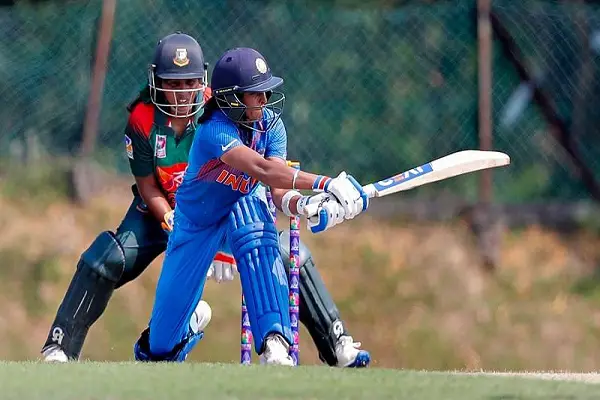
From Bogra to Brisbane: the Bangladeshi women increasing their nation’s horizons
Eleni Skoura, again from Thessaloniki, became the first woman elected to the Hellenic Parliament in 1953, with the conservative Greek Rally, when she gained a by-election against one other feminine opponent. In Denmark, the Danish Women’s Society (DK) debated, and informally supported, women’s suffrage from 1884, however it did not help it publicly until in 1887, when it supported the suggestion of the parliamentarian Fredrik Bajer to grant women municipal suffrage. However, as the KF was very a lot involved with worker’s rights and pacifist activity, the query of women’s suffrage was in reality not given full attention, which led to the institution of the strictly women’s suffrage motion Kvindevalgretsforeningen (1889–1897). In 1890, the KF and the Kvindevalgretsforeningen united with 5 women’s commerce worker’s unions to discovered the De samlede Kvindeforeninger, and thru this kind, an active women’s suffrage campaign was arranged by way of agitation and demonstration. However, after having been met by compact resistance, the Danish suffrage motion nearly discontinued with the dissolution of the De samlede Kvindeforeninger in 1893.
Upon its declaration of independence on 26 May 1918, in the aftermath of the Russian Revolution, the Democratic Republic of Georgia prolonged suffrage to its feminine residents. The women of Georgia first exercised their proper to vote in the 1919 legislative election. The 21 April 1944 ordinance of the French Committee of National Liberation, confirmed in October 1944 by the French provisional authorities, prolonged the suffrage to French women. The first elections with female participation had been the municipal elections of 29 April 1945 and the parliamentary elections of 21 October 1945. “Indigenous Muslim” women in French Algeria also referred to as Colonial Algeria, needed to wait till a three July 1958 decree.
Bengalis
Indigenous Australians were not given the right to vote in all states until 1962. Algeria1962In 1962, on its independence from France, Algeria granted equal voting rights to all men and women. In 1881 the Isle of Man, an internally self-governing dependent territory of the British Crown, enfranchised women property homeowners. With this it provided the first action for girls’s suffrage within the British Isles.
Full voting rights have been bestowed by the communist regime in September 1944 and reaffirmed by an electoral law reform on 15 June 1945. Women who owned property gained the right to vote in the Isle of Man in 1881, and in 1893, women within the then British colony of New Zealand were granted the proper to vote. In Australia, women progressively gained the right to vote between 1894 and 1911 (federally in 1902). Most main Western powers prolonged voting rights to women in the interwar period, together with Canada , Britain and Germany , Austria and the Netherlands and the United States .
However, they have limited success, and ladies have been allowed to vote and to be elected solely after when Communist rule was established. A revision of the constitution in October 1921 (it changed art. forty seven of the Constitution of Belgium of 1831) launched the general proper to vote based on the “one man, one vote” principle.
Dame Enid Lyons, within the Australian House of Representatives and Senator Dorothy Tangney became the first women in the Federal Parliament in 1943. Lyons went on to be the primary lady to carry a Cabinet submit within the 1949 ministry of Robert Menzies. Rosemary Follett was elected Chief Minister of the Australian Capital Territory in 1989, changing into the primary lady elected to guide a state or territory. After this media success, the WSPU’s techniques became more and more violent. This included an try in 1908 to storm the House of Commons, the arson of David Lloyd George’s country house (regardless of his help for girls’s suffrage).